


Updated on October 1, 2026 by John Ingham
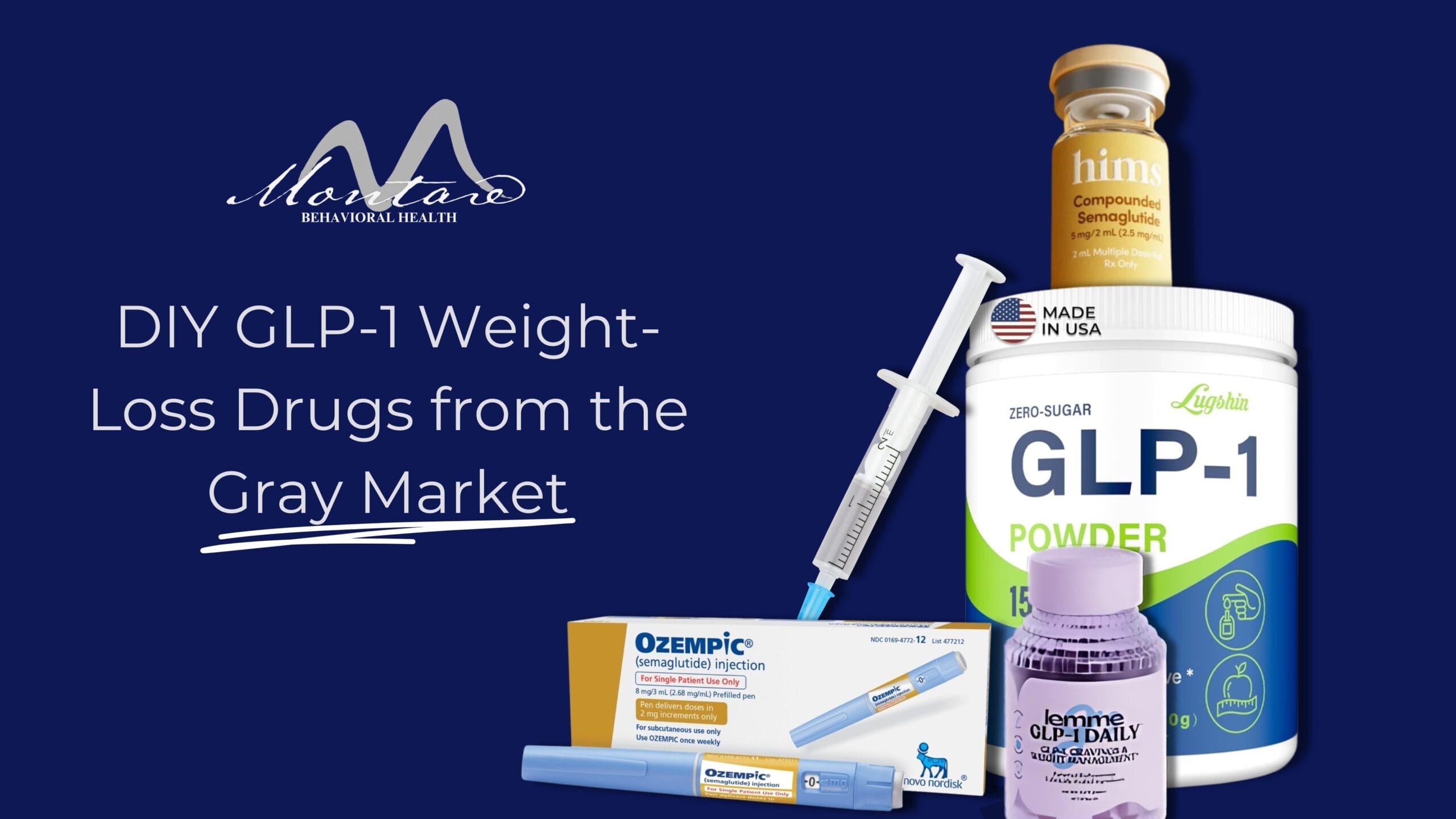
GLP-1 medications, like semaglutide (Ozempic®, Wegovy®), were originally developed to help people with type 2 diabetes manage blood sugar. More recently, they’ve gained massive attention for their potential in weight loss. With demand surging, and legitimate prescriptions sometimes hard to access, a dangerous trend has emerged: DIY GLP-1 drugs from the gray market.
While these unregulated sources may promise quick results, they often come with serious health risks, especially for individuals with existing mental health conditions or a history of eating disorders. At Montare Behavioral Health, we know how dangerous self-medicating can be, both physically and psychologically, and we’re committed to helping people make informed, safe choices for their health.
What Are GLP-1 Drugs?
GLP-1 receptor agonists mimic a hormone in the body that helps regulate blood sugar and appetite. When prescribed and monitored by a qualified healthcare provider, these medications can:
- Improve insulin sensitivity
- Reduce appetite and food cravings
- Support weight loss in certain patients
However, outside of a controlled medical environment, these effects can become unpredictable and even dangerous.
The Rise of DIY & Gray Market GLP-1 Sales
Illegal online vendors and social media sellers may offer unapproved products or raw peptide powders for home mixing. These should not be conflated with FDA-approved medications or lawful patient-specific compounding. FDA has resolved the semaglutide and tirzepatide injection shortages; compounding remains subject to applicable legal limits, including restrictions on making essentially copies of approved products.
Risks include:
- Contamination from improper handling or manufacturing
- Incorrect dosing leading to overdose or lack of effect
- Unknown ingredients or mislabeled products
- Dangerous side effects without medical monitoring
Mental Health Risks of Unregulated GLP-1 Use
At Montare, we treat many patients whose mental health conditions are worsened by unregulated medication use. For GLP-1 drugs, the risks include:
- Increased anxiety or panic from unstable blood sugar
- Triggering or worsening depression
- Heightened risk of obsessive eating behaviors
- Potential for self-esteem issues or body image dysmorphia
For someone already struggling with mental health, these risks are compounded — making proper medical oversight essential.
The “Subscription” Trend: Telehealth GLP-1, “Lemme” GLP-1 and Other Services
Some companies now market subscription-based GLP-1 programs directly to consumers. These often promise convenient weight-loss solutions shipped to your door.
Examples include:
- Lemme GLP-1 – A dietary supplement, not compounded semaglutide or a prescription GLP-1 receptor agonist. Supplements should not be equated with prescription medications.
- Telehealth providers may prescribe approved medications or, where lawful and appropriate, patient-specific compounded preparations. A virtual visit alone does not establish unsafe or unlawful care.
Potential concerns:
- Not all compounding pharmacies meet FDA safety standards
- Doses and formulations may differ from branded versions
- Telehealth consults can be rushed or incomplete
- Ongoing cost can be far higher than expected
While these services may be legal, they are not without risks, especially for individuals with co-occurring mental health disorders.
Four GLP-1 Product Categories and Key Differences
| Category | Key distinction |
| FDA-approved medications | Reviewed for safety, effectiveness, and quality for labeled indications; prescribed and dispensed through legitimate clinical and pharmacy channels. |
| Lawful patient-specific compounding | May meet an individual medical need under limited applicable circumstances. Compounded drugs are not FDA-approved and should not be presented as equivalent approved generics. |
| Unapproved research products and illegal online sales | Research-use-only labels do not authorize human treatment. Products sold directly for human use may have unknown identity, purity, strength, or sterility. |
| Counterfeit products | Falsely claim to be authentic medicines and may contain incorrect or harmful ingredients. |
As of May 31, 2026, FDA reported 990 adverse-event reports associated with compounded semaglutide and more than 730 with compounded tirzepatide. These reports do not establish causation in every case, and underreporting is possible.
Why Professional Supervision Matters
When GLP-1 therapy is medically appropriate, it should be:
- Prescribed by a licensed physician after a full health assessment
- Monitored for side effects and mental health changes
- Combined with nutritional support and therapy if needed
At Montare Behavioral Health, we take a whole-person approach, addressing not just the physical aspects of weight management, but also the emotional, psychological, and behavioral components of the root cause and co-occuring mental health that impact long-term well-being.
Safer Alternatives for Weight Loss & Mental Wellness
If weight management is impacting your mental health, alternatives may include:
- Structured nutritional counseling
- CBT or DBT for anxiety or depression causing emotional eating
- Mindfulness practices for stress reduction
- Treating underlying depression or trauma that contributes to weight changes
- Exercise & movement
Final Thoughts
DIY GLP-1 drugs from the gray market may seem like a quick fix, but they carry serious risks that can harm both body and mind. Whether you’re struggling with weight, body image, or co-occurring mental health conditions, safe, supervised care is the best path forward. The team here at Montare can help guide you to the best treatment for Mental Health and provide an assessment to determine the best care to fit your needs. Call today to get started on your path to wellbeing.
Frequently Asked Questions
What are GLP-1 drugs used for?
GLP-1 receptor agonists are prescribed to manage type 2 diabetes by regulating blood sugar and, in some cases, to support weight loss. They work by slowing digestion, reducing appetite, and promoting feelings of fullness.
Why is it risky to buy GLP-1 drugs from the gray market?
Gray market sources are unregulated. The medication may be contaminated, mislabeled, improperly dosed, or entirely counterfeit. Without medical oversight, side effects can go unnoticed until they become severe.
Can GLP-1 drugs cause mental health side effects?
Yes. Unregulated or improperly used GLP-1 drugs can cause anxiety, mood changes, and in some cases, worsen depression or eating disorder symptoms — especially in individuals with pre-existing mental health conditions.
Are subscription GLP-1 programs safe?
Safety depends on the medication or product, the clinical assessment, and the dispensing pharmacy. Distinguish approved drugs, lawful compounding, research products, counterfeits, and dietary supplements. Verify provider credentials and pharmacy licensing.
What are the legal risks of DIY GLP-1 injections?
Illegal online sales, counterfeit products, and research powders intended for home injection raise different legal and safety issues from lawful patient-specific compounding. Obtain medications through a licensed prescriber and pharmacy.
What are safer alternatives to unregulated GLP-1 drugs?
Safer options include medically supervised GLP-1 therapy, nutritional counseling, cognitive behavioral therapy (CBT), dialectical behavior therapy (DBT), and holistic approaches like mindfulness-based stress reduction.
Sources
- American Diabetes Association. (2023). Standards of Care in Diabetes—2023. Diabetes Care, 46(Supplement_1), S1–S322. https://doi.org/10.2337/dc23-SINT
- Food and Drug Administration. (2023). FDA warns consumers not to use compounded versions of semaglutide. U.S. Food and Drug Administration. https://www.fda.gov/drugs/postmarket-drug-safety-information-patients-and-providers/fda-warns-consumers-not-use-compounded-versions-semaglutide
- Kushner, R. F., & Kahan, S. (2023). Pharmacologic treatment of obesity in adults. New England Journal of Medicine, 388(3), 251–263. https://doi.org/10.1056/NEJMra2207734
- Novo Nordisk. (2023). Wegovy® (semaglutide) injection prescribing information. https://www.novo-pi.com/wegovy.pdf
- Wilding, J. P. H., Batterham, R. L., Calanna, S., Davies, M., Van Gaal, L. F., Lingvay, I., … & Kushner, R. F. (2021). Once-weekly semaglutide in adults with overweight or obesity. New England Journal of Medicine, 384(11), 989–1002. https://doi.org/10.1056/NEJMoa2032183